WHY YOU SHOULD APPLY PAINT PROTECTION FILM TO YOUR CAR
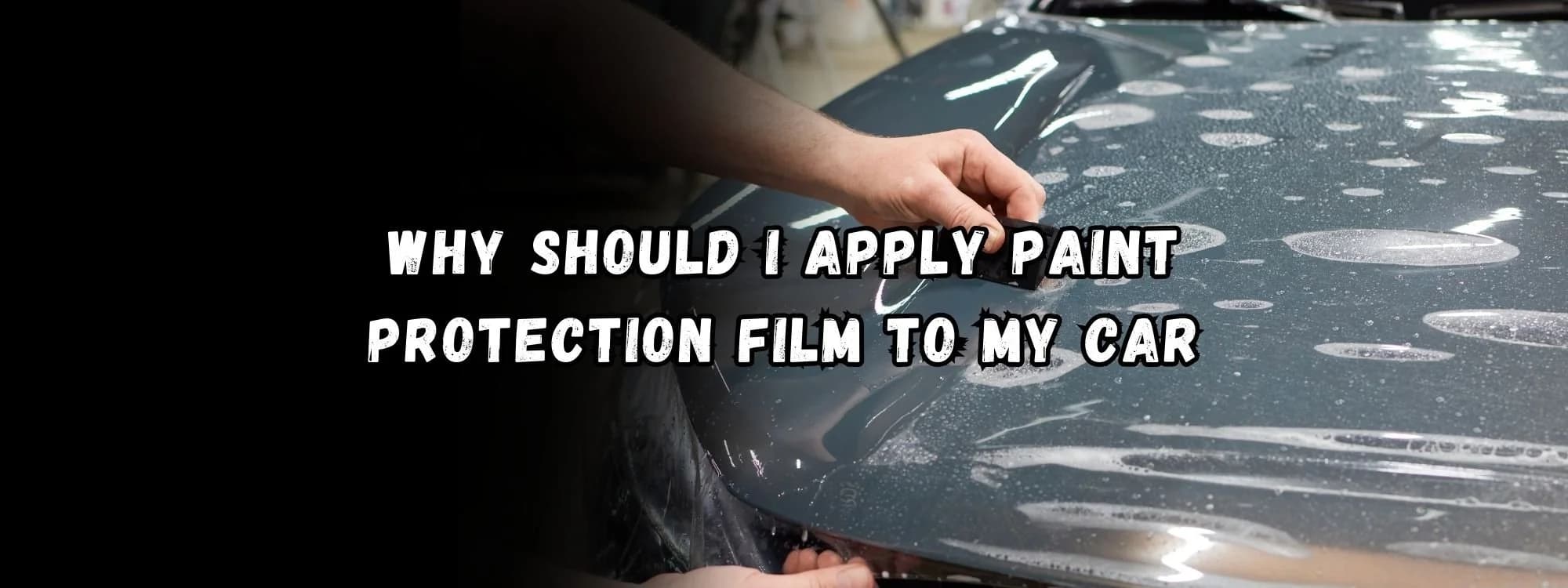
Living in Saint Paul, Minneapolis, and anywhere in Minnesota means your vehicle is constantly battling harsh weather, snow, salt, and nonstop rock chips. Because of this, many drivers look for long-term paint protection that actually works in real Minnesota weather.
One of the strongest and most reliable options available today is PPF (Paint Protection Film), sometimes called clear bra or clear film protection.
WHAT IS PPF AND WHY DOES IT PROTECT BETTER THAN ANYTHING ELSE?
Paint Protection Film is a clear, flexible urethane film — about 6 to 10 mil thick — that bonds directly to your vehicle's painted surfaces. It's a sacrificial shield: rock chips, salt damage, scratches from car washes, and minor parking lot impacts hit the film, not the paint.
Unlike wax or ceramic coating (which are chemical layers), PPF is a physical layer with self-healing properties. Light scratches close themselves with heat from the sun. That's the difference between hiding damage and actually preventing it.
HOW PPF HELPS YOUR VEHICLE KEEP A HIGHER RESALE VALUE
Buyers, dealers, and inspectors look at the front bumper, hood, mirrors, and fenders first. Those panels are the most expensive to repaint and the easiest to damage. A clean, chip-free front end on a 2- or 3-year-old car is rare — and it commands real dollars when you sell.
We've seen clients sell vehicles privately for thousands more simply because the paint looked factory-new. PPF is one of the few protection investments that actually returns its cost at resale.
WHY NEWER VEHICLES BENEFIT MOST FROM INSTALLING PPF EARLY
The best time to install PPF is when the paint is still factory-fresh — no chips, no swirls, no oxidation. Once damage is there, it's there forever (or it requires correction first, which adds cost).
Catching it early means the film bonds to flawless paint. When you remove or replace the film 7 to 10 years later, the panel underneath looks identical to delivery day.
WHY PROFESSIONAL PPF INSTALLATION IS SO IMPORTANT
PPF installation is part technique, part decision-making. Where do the cuts go? How do edges wrap? Where does the film tuck under panels so the seams disappear? A bad install creates lifted edges, trapped air, fingerprints, and visible cut lines on a $60,000 car.
At Yelo we use STEK films, plotter-cut templates, and a controlled environment. Every install is documented and warrantied. Don't trust this to a side-of-the-road installer.
WHY PPF IS ESPECIALLY IMPORTANT FOR HIGH-IMPACT AREAS
Front bumpers, hoods, fenders, mirrors, and headlights take the brunt of road debris on Minnesota highways. A single repainted bumper can run $1,500–$3,000. A repainted hood can be $2,000–$4,000. Headlight replacement on premium cars goes from $1,000 to $5,000.
Compare that to a Premium PPF Kit that protects all those panels for $1,199. The math isn't close.
FINAL THOUGHTS: WHY PPF MAKES SENSE FOR MINNESOTA DRIVERS
If you drive your vehicle year-round in the Twin Cities, PPF isn't a luxury — it's protection for one of the most expensive things you own. We can walk you through coverage options that fit your driving habits and your budget.
Stop by the studio in Little Canada or book online and we'll give you a real quote on the spot.
Tags
QUESTIONS WE HAVEN'T COVERED?
Call the shop or send a message — same way we explain it on the videos.